What Is Esports? A Complete Beginner's Guide
A few years ago, I was sitting in a crowded room in Lahore watching five teenagers hunched over monitors while thousands of people chanted their names on a livestream. The prize pool on the line that night was bigger than most cricket tournaments in the region. That was my first real encounter with esports — and it changed the way I thought about gaming forever.
If you have ever wondered how playing video games turned into packed arenas, million-dollar prize pools and full-time careers, you are in the right place. Esports, short for electronic sports, is organized competitive video gaming. Professional players and teams compete in leagues and tournaments, often in front of massive live and online audiences, for prize money, sponsorships and glory. This guide breaks it all down for complete beginners: what esports actually is, the games that define it, how tournaments work, how professional players train, and how you can start watching and following the scene today.
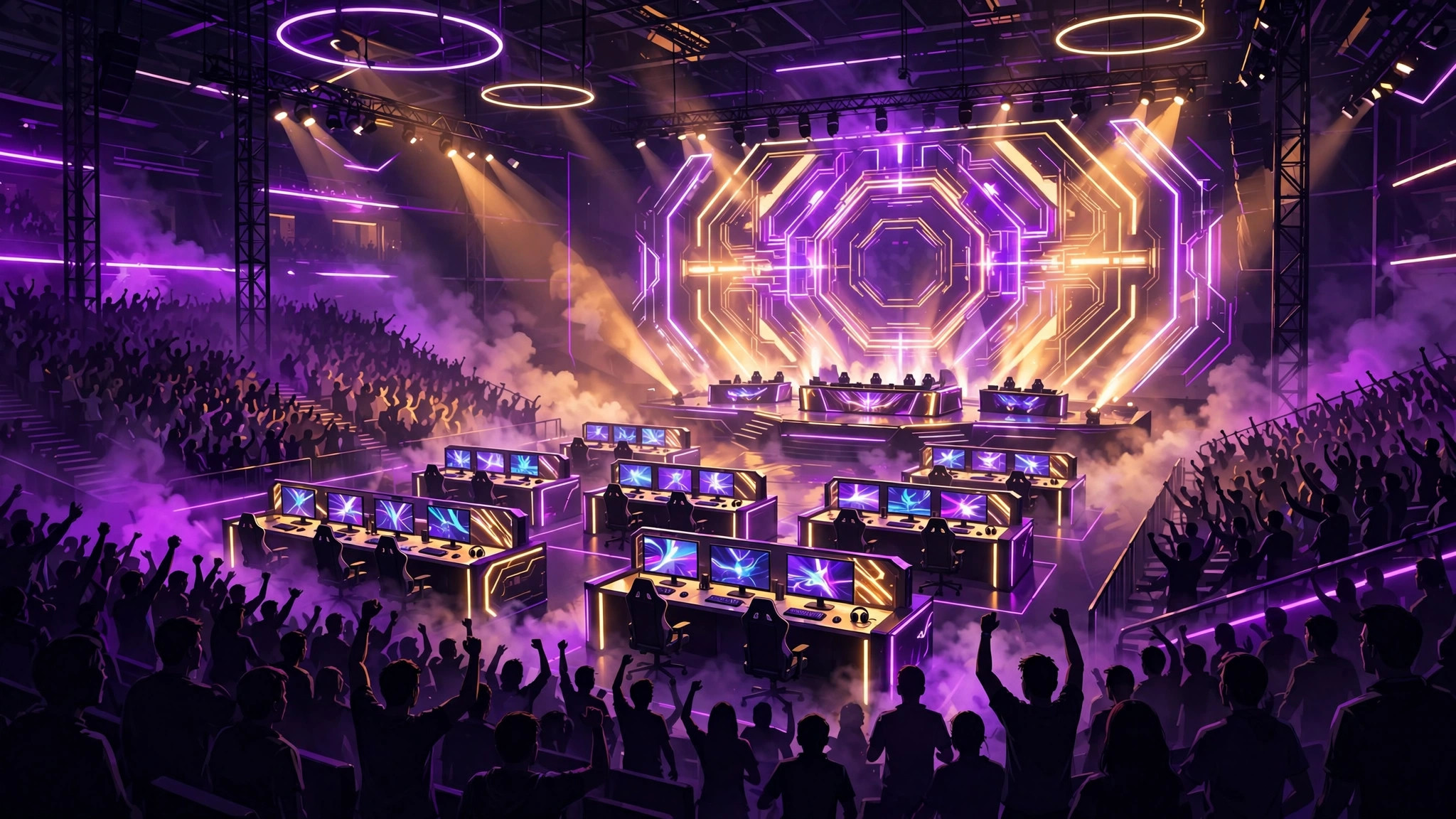
What Exactly Is Esports?
At its simplest, esports is competition through video games. Two individuals, or two teams, face off in a game with clear rules, a referee-like administration, and something at stake — money, ranking points, or qualification for a bigger event. The difference between esports and casual gaming is organization. A ranked match at home is competitive gaming. A tournament with brackets, scheduled matches, casters commentating every play, and a trophy at the end is esports.
The scale is what surprises most newcomers. Top esports events fill stadiums. The League of Legends World Championship has sold out venues with tens of thousands of seats, while the online audience counts in the millions of concurrent viewers. In South Asia, mobile esports titles like PUBG Mobile and Free Fire have built enormous regional scenes, with national championships and collegiate leagues that feel a lot like traditional sports seasons. Sponsorship deals, team jerseys, training facilities called gaming houses, coaches, analysts — the infrastructure around professional gaming now mirrors conventional sports in many ways.
It is also worth clearing up a common misconception: esports is not one game. It is an umbrella term, like "ball sports" covers football, cricket and tennis. The esports world is made up of dozens of different game communities, each with its own leagues, stars and traditions.
The Games That Define Esports
Not every game becomes an esport. The titles that rise to the top share a few traits: deep competitive mechanics, a balance between individual skill and teamwork, and a spectator-friendly format where viewers can follow the action. Here are the heavyweights.
League of Legends
Riot Games' multiplayer online battle arena (MOBA) has been the backbone of esports since the early 2010s. Two teams of five pick from over 160 champions, each with unique abilities, and battle to destroy the enemy base. Matches are strategic marathons — the pros play with astonishing coordination, executing team fights where five players chain abilities within fractions of a second. The annual World Championship is one of the biggest events in all of gaming, with prize pools and production values that rival mainstream sports finals.
Counter-Strike 2
The legendary tactical first-person shooter continues a competitive tradition stretching back more than two decades. Two teams of five — Terrorists and Counter-Terrorists — alternate between attacking and defending bomb sites across tightly designed maps. Rounds are short, tense and decided by aim, positioning, utility usage and nerve. Counter-Strike's esports scene is built on a rich tournament circuit including Majors, which are the equivalent of world championships, plus long-running leagues with promotion and relegation.
Dota 2
Valve's MOBA is famous for The International, its annual world championship that has repeatedly set records for the largest prize pools in esports history — at its peak, over 40 million dollars, partly crowdfunded by the community through in-game purchases. Dota 2 matches are famously complex: five-on-five battles with over 120 heroes, an economy, item builds, and strategies that can flip in a single late-game fight. The skill ceiling is enormous, which is part of why its competitive scene commands such devotion.
Valorant
Riot's tactical shooter blends precise gunplay in the Counter-Strike tradition with character abilities borrowed from hero shooters. Each agent has a role — duelists who entry-frag, controllers who block vision with smokes, initiators who gather information, and sentinels who lock down sites. Since its 2020 launch, Valorant has built one of the fastest-growing esports ecosystems in the world, with the international Valorant Champions Tour running regional leagues on every continent.
Mobile Esports: PUBG Mobile and Free Fire
In South Asia, the Middle East and Latin America, mobile is king. PUBG Mobile's battle royale format — 100 players dropping onto an island, last squad standing — translates brilliantly to competitive play with multi-stage tournaments and national qualifiers. Free Fire, a faster, more accessible battle royale, has built one of the largest mobile esports audiences on the planet. For many players in Pakistan and India, mobile esports is the most realistic entry point: the device is already in your pocket, and the competitive ladders start at the casual level.
Other Major Titles
The scene is wider than the big five. Rocket League turns football into rocket-powered car acrobatics. Apex Legends and Fortnite run huge battle royale competitions. Fighting games like Street Fighter and Tekken have grassroots scenes that feed into events like EVO, the world's most prestigious fighting game tournament. EA Sports FC and eFootball carry the football crowd, while StarCraft II remains the gold standard for one-versus-one strategy.
How Esports Tournaments Work
Esports tournaments follow structures that will feel familiar if you have ever watched a cricket or football cup. Here is the typical anatomy of a major event.
Qualifiers and Leagues
Most professional scenes run on a seasonal model. Teams first compete in regional leagues — think of them like domestic cricket leagues — playing weekly matches over several months. Top teams from each region then qualify for international events. In franchised leagues like the League of Legends LEC or the Valorant Champions Tour's international leagues, teams are permanent partners; in open circuits like Counter-Strike, teams must constantly qualify through open and closed qualifiers, which keeps the scene volatile and exciting.
Formats: Groups, Brackets and Swiss
Once at a big event, teams are sorted through formats designed to find the genuinely best team. Group stages split teams into pools where everyone plays each other or a set number of matches. Playoffs are usually single or double elimination brackets — lose once (or twice in double elimination) and you are out. Many modern events use the Swiss system, borrowed from chess: teams play opponents with the same win-loss record each round, and three wins advance you while three losses send you home. Grand finals are typically best-of-five series, which rewards consistency over a single lucky game.
Casters, Observers and Production
What you see on a broadcast is produced like television. Play-by-play casters narrate the action while color analysts explain strategy. Observers control the in-game camera, cutting between players at the perfect moment. Behind the scenes, referees and admins enforce rules on everything from pauses to equipment checks. At the biggest events, the stage production — lighting, walkouts, crowd chants — rivals any mainstream sport.
Prize Pools and Money
Prize money varies enormously. Small weekly online cups might pay a few hundred dollars; Majors and World Championships pay millions. In Dota 2's The International, crowdfunding pushed pools past forty million dollars. But prize money is only part of professional income — salaries from team organizations, streaming revenue, and sponsorships often matter more for day-to-day stability. That said, for newcomers it is worth remembering that only the very top sliver of players earns a comfortable living; the pyramid is steep.
How Professional Players Train and Compete
The "they just play games all day" stereotype misses the reality. Professional training is structured and demanding.
Practice Schedules
Most professional teams practice six to ten hours a day, six days a week, during the season. The day typically splits into blocks: individual practice (aim training, mechanics, reviewing personal gameplay), team scrimmages against other professional teams, and review sessions where the coach breaks down recorded matches play by play. Many teams also study opponents' tendencies the way cricket teams study bowling patterns — drafting strategies, preferred plays, and map veto habits.
Roles Within a Team
Every esports team has specialists. In Valorant, an in-game leader calls the strategies mid-round. In League of Legends, the shotcaller directs team movements. Support players in MOBAs sacrifice personal glory to enable their teammates. Coaches design the overall game plan, while analysts crunch statistics — win rates on specific maps, first-blood percentages, economy trends — to find edges. Sports psychologists are now common at top organizations, helping players handle pressure, tilt and burnout.
Physical and Mental Demands
Competitive gaming at the top level is genuinely taxing. Reaction times measured in milliseconds, sustained concentration over matches that can last an hour, and the pressure of performing in front of millions of viewers take a toll. That is why professional organizations now employ fitness trainers, nutritionists and psychologists. Careers are also short — many pros peak in their late teens or early twenties, which makes education and post-career planning a real concern in the industry.
How to Start Watching and Following Esports
Getting into esports as a viewer is easy and free. Here is a practical starter plan.
Pick Your Game
Start with a game you already play or one whose concept excites you. If you love shooters, Valorant or Counter-Strike 2 broadcasts are immediately thrilling. If you enjoy strategy, League of Legends or Dota 2 rewards deeper watching. Mobile players should check out PUBG Mobile's official tournament streams — the South Asian scene is vibrant and easy to follow.
Where to Watch
Twitch remains the home of esports broadcasting, with official league channels running professional productions. YouTube carries major events too, and many tournaments stream on both. Follow the official league accounts first — the Valorant Champions Tour, the League of Legends esports channel, or PUBG Mobile Esports — then branch out to team channels and popular co-streamers who explain the game as they watch, which is perfect for beginners.
Learn the Basics of Spectating
Your first few matches may look chaotic. Give it time. Watch with a beginner guide open in another tab, or find a streamer who commentates for newcomers. Learn the win condition first, then one or two core concepts — in Valorant, understand the spike plant and defuse; in League of Legends, understand towers and the Nexus. Within a handful of matches, the chaos resolves into readable, dramatic storytelling.
Follow the Storylines
Esports is most fun when you follow narratives: the underdog team on a miracle run, the veteran chasing one last title, the rivalry between two star players. Read post-match threads on community forums, follow a couple of esports journalists, and pick a team to support. Fandom is half the experience.
Getting Involved Beyond Watching
Watching often leads to playing. Most esports titles have ranked ladders where anyone can climb from the bottom rung. Grassroots tournaments — college cups, community Discord leagues, local LAN events — are the traditional first step toward competitive play. In Pakistan and India, university esports societies and online community tournaments are growing fast and are genuinely welcoming to newcomers. Even if you never go pro, competing in a structured tournament teaches teamwork, communication and composure under pressure — skills that transfer well beyond gaming.
Frequently Asked Questions
Is esports a real sport?
It depends on your definition, but the debate matters less than the reality: esports involves structured competition, professional athletes who train full-time, coaches, leagues, massive audiences and serious money. Several countries officially recognize esports, and it has appeared at multi-sport events like the Asian Games. Whether you call it a sport or not, it is undeniably a professional competitive discipline.
How do esports players make money?
Through a mix of team salaries, tournament prize winnings, streaming income, sponsorships and content creation. Top players in major leagues earn salaries comparable to conventional athletes, while prize money can be life-changing at the biggest events. However, only a small fraction of competitive players reaches that level — for most, it is a passion pursued alongside studies or work.
What is the best esports game for a beginner to watch?
Start with whatever you already play, since familiarity makes broadcasts instantly more enjoyable. If you are choosing fresh, Valorant and Rocket League are among the easiest to follow visually — the objectives are clear and the action is readable. PUBG Mobile tournaments are a great pick for mobile gamers in South Asia, with strong regional coverage and commentary.
Can anyone become a professional esports player?
In principle, yes — the ladders are open to everyone, and many pros were discovered through ranked play. In practice, reaching the professional level demands exceptional talent, thousands of hours of deliberate practice, and often the right circumstances: good internet, supportive surroundings, and access to competitive scenes. It is a realistic dream for the dedicated, but it should be pursued with eyes open and a backup plan.